What Is a Metallic Epoxy Floor?
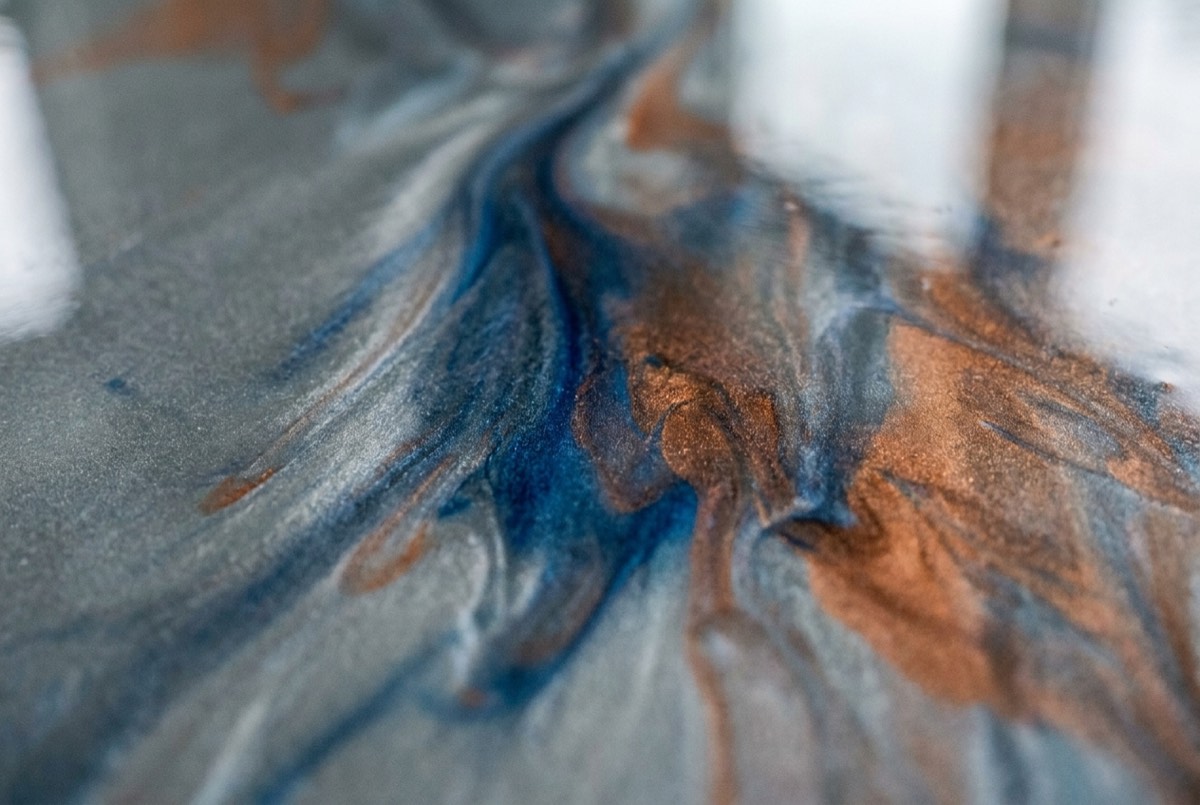
A metallic epoxy floor is a decorative system. Metallic pigments are blended into clear or tinted epoxy and moved across the surface by the installer while it is wet. The pigments swirl and settle in patterns that can look like marble, lava, water, or smoke, and no two floors turn out exactly alike. A clear topcoat then seals the finish and gives it a deep, glossy look.
- Every metallic floor is unique, because the pattern is created by hand.
- Prices usually fall in the higher range of epoxy systems, often about $7 to $15 per square foot.
- The finish is high gloss, so ask about traction in wet areas.
- Prep matters as much as with any other coating.
Where Metallic Epoxy Is Used
- Showrooms, offices, and retail spaces that want a high-end look
- Restaurants, bars, and hospitality lobbies
- Living areas, basements, and kitchens in homes with slab floors
- Decorative garage floors and workshops
- Interior spaces with plenty of light, which show off the depth of the pattern
How a Metallic Floor Is Installed
- Prepare the slab. The concrete is ground, cracks and pits are repaired, and moisture is tested.
- Apply a base coat. A solid-color epoxy sets the background color, often dark, to make the metallic pigments stand out.
- Apply the metallic coat. Pigment is mixed into clear epoxy, poured, and worked with tools and techniques to form the pattern.
- Let it settle and cure. The pattern develops as the epoxy levels.
- Seal with a clear topcoat. Often polyaspartic or urethane, for scratch and UV resistance.
The process takes longer than a basic floor and relies on the installer's skill, so ask to see photos of past metallic work.
Choosing Colors and Patterns
- Darker base coats make metallic pigments look more dramatic.
- Blue, copper, silver, and charcoal blends are common.
- Small samples can look very different from a full floor, so ask for a sample board or a photo of finished work.
- Lighting changes the look, so consider where windows and fixtures are.
Cost Factors
- Floor size and complexity
- Number of colors and the amount of pattern work
- Concrete condition and repairs
- Moisture treatment, which is a common concern on Gulf Coast slabs
- Topcoat type and any anti-slip texture
See the epoxy floor cost guide for example totals.
Care and Limitations
- Sweep and damp-mop with a mild cleaner. Avoid harsh solvents.
- Use mats and felt pads to limit scratches.
- High gloss shows scratches and dust more than a flake finish.
- Standard epoxy can yellow in direct sun, so outdoor areas need a UV-stable topcoat. See polyaspartic vs epoxy.
Questions to Ask an Installer
- Can I see photos of metallic floors you have installed?
- How will you prepare the slab, and do you test for moisture?
- What topcoat will you use, and how slippery will the finish be?
- What does the warranty cover?
- Are you licensed and insured in Mississippi?
The image above is an illustration of a metallic epoxy floor. It is not a photo of a completed job.
See also: decorative flake floors, garage floor coatings, and concrete prep and moisture.
Frequently Asked Questions
What is metallic epoxy flooring?
Metallic epoxy is a decorative epoxy system where metallic pigments are mixed into the resin and manipulated to create swirling, marble-like patterns with depth and shine.
How much does a metallic epoxy floor cost?
Metallic and designer systems commonly run about $7 to $15 per square foot, depending on the size, prep, and design. Prices vary by installer, so compare written quotes.
Can metallic epoxy be used outdoors?
Standard epoxy can yellow in direct sun, so metallic systems are mostly used indoors or under a UV-stable topcoat. Ask the installer about UV protection for sunny spots.
Is a metallic epoxy floor slippery?
A high-gloss surface can be slippery when wet. Installers can add a texture or anti-slip additive to the topcoat. Ask how slick the finish will be.
How long does a metallic epoxy floor last?
With good prep and a quality topcoat, many last for years. Wear, sun exposure, and moisture problems shorten the life.