What Is a Decorative Flake Floor?
A decorative flake floor, sometimes called a chip or terrazzo-style floor, is one of the most common garage floor finishes. The installer rolls on an epoxy base coat, scatters colored vinyl flakes over it while it is wet, scrapes off the loose flake once it cures, and then seals everything under a clear topcoat. The flakes give the floor color and texture and make it harder to see dirt, small flaws, and tire marks.
- Flake floors typically cost about $5 to $10 per square foot.
- The texture adds traction and hides small imperfections.
- The topcoat determines most of the wear and UV resistance.
- A polyaspartic topcoat is a popular choice for sunny garages.
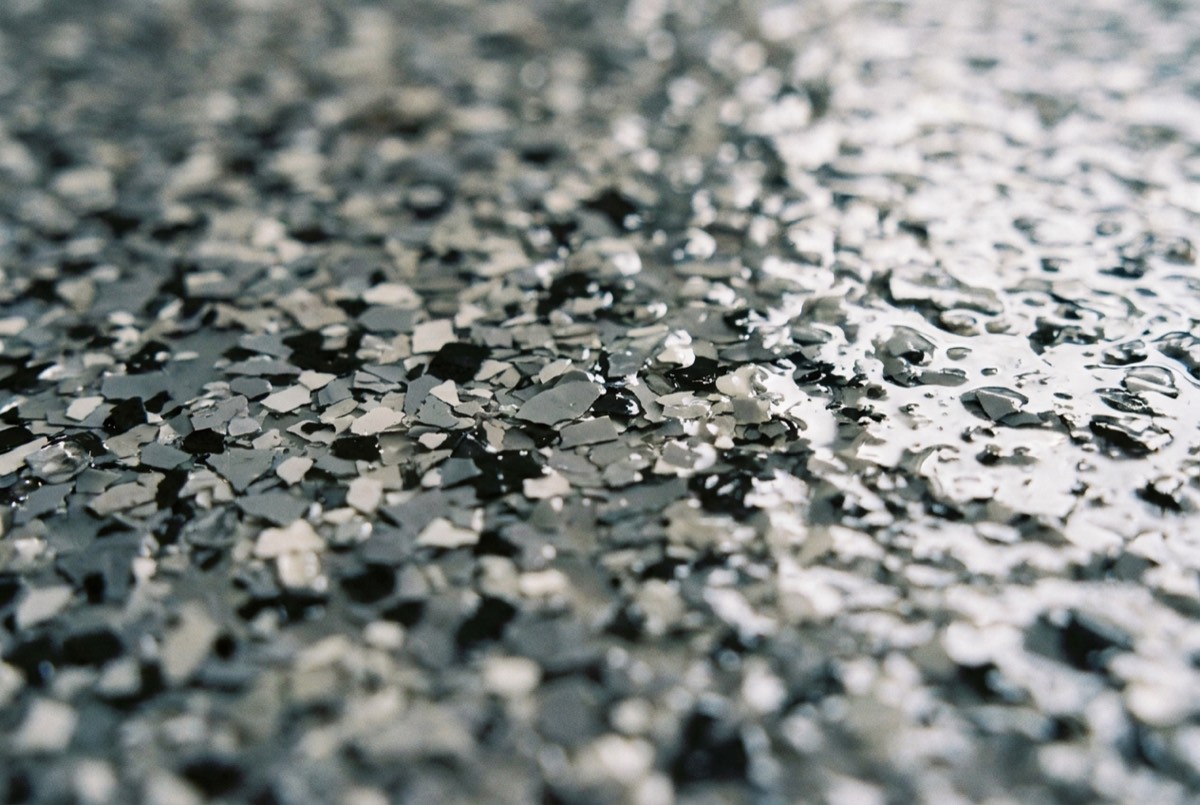
Full vs. Partial Broadcast
| Type | Look | Notes |
|---|---|---|
| Full broadcast | Flake covers the floor completely, with a dense speckled look | Hides the most flaws. Uses more flake and costs more. |
| Partial broadcast | More of the base color shows through the flake | Lighter look and a lower cost. Shows more of the surface. |
Flake Size and Color
- Chip size. Common sizes range from small flakes to larger chips. Larger chips give a bolder pattern.
- Blends. Installers offer many mixes, such as gray and black, tan and brown, or blue and white.
- Base color. The base coat color shows between flakes and changes the overall look.
- Light vs. dark. Light blends make a garage look brighter. Mid-tone blends hide dirt the best.
- Quartz. Colored quartz can replace vinyl flake for extra durability and traction.
How a Flake Floor Is Installed
- Grind and prepare the slab. Cracks are repaired, and moisture is tested.
- Apply the base coat. A pigmented epoxy, sometimes with a moisture-blocking primer first.
- Broadcast the flake. The installer throws the flake into the wet coat until the surface is covered.
- Cure and scrape. Once hard, the loose flake is scraped and swept away.
- Apply the topcoat. One or two clear coats, often polyaspartic or urethane, seal the floor.
Why Choose Flake?
- It hides tire marks, dust, and small surface flaws better than a plain solid color.
- It adds texture and traction without a heavy anti-slip additive.
- Many color blends match different garage styles.
- It is a well-established system, so many installers offer it.
What to Watch For
- Cracks and damage still need repair before coating.
- Poor prep or a wet slab can cause peeling, even with a good flake finish. See concrete prep and moisture.
- Standard epoxy topcoats can yellow in the sun. See polyaspartic vs epoxy.
- Very textured finishes can be harder to clean than smooth ones.
Questions to Ask an Installer
- Is the quote for a full or partial broadcast?
- What flake size and color blends do you offer, and can I see samples?
- How will you prepare the slab and handle moisture?
- What topcoat do you use, and what does the warranty cover?
- Are you licensed and insured in Mississippi?
Images on this page are illustrations or examples, not photos of completed jobs.
See also: garage floor coatings, metallic epoxy floors, and the cost guide.
Frequently Asked Questions
What is a decorative flake epoxy floor?
A flake system broadcasts colored vinyl chips over a wet epoxy base coat, then seals them under a clear topcoat. It adds color, texture, and traction and hides small flaws in the concrete.
How much does a flake epoxy floor cost?
Flake systems commonly run about $5 to $10 per square foot, depending on prep, size, and the topcoat. Prices vary, so compare written quotes.
What is the difference between full and partial broadcast?
A full broadcast covers the floor completely with flake, so you see mostly the flake. A partial broadcast scatters less, so more of the base color shows through.
Is a flake floor slippery?
The texture from the flake usually adds traction, and installers can add more with an anti-slip additive in the topcoat. Ask how the finish feels when wet.
Can flake floors hide cracks and stains?
Flake can hide small surface flaws and minor color variation, but cracks and damage should still be repaired before coating.